

By Qamar Zaman
Understanding Gap Confluence: Order Blocks, FVGs, and Gap Quality
Why Gaps Act as Magnets
When price moves aggressively in one direction, it leaves behind an imbalance — an area where buyers and sellers didn’t have time to transact. The market “remembers” these zones and tends to return to fill them before continuing.
This is what the QZ GAP indicator detects automatically.
Gaps + Order Blocks = High Probability
An Order Block (OB) is a zone where institutional traders placed large orders that caused a significant move. When a gap forms directly at or near an order block level, you have confluence — two powerful concepts aligning.
Why this matters:
- The gap shows imbalance (unfilled orders)
- The order block shows institutional interest
- Together = higher probability reaction zone
Look for: Gaps that form at previous swing highs/lows, or at levels where price previously consolidated before a big move.
Fair Value Gap (FVG) Explained
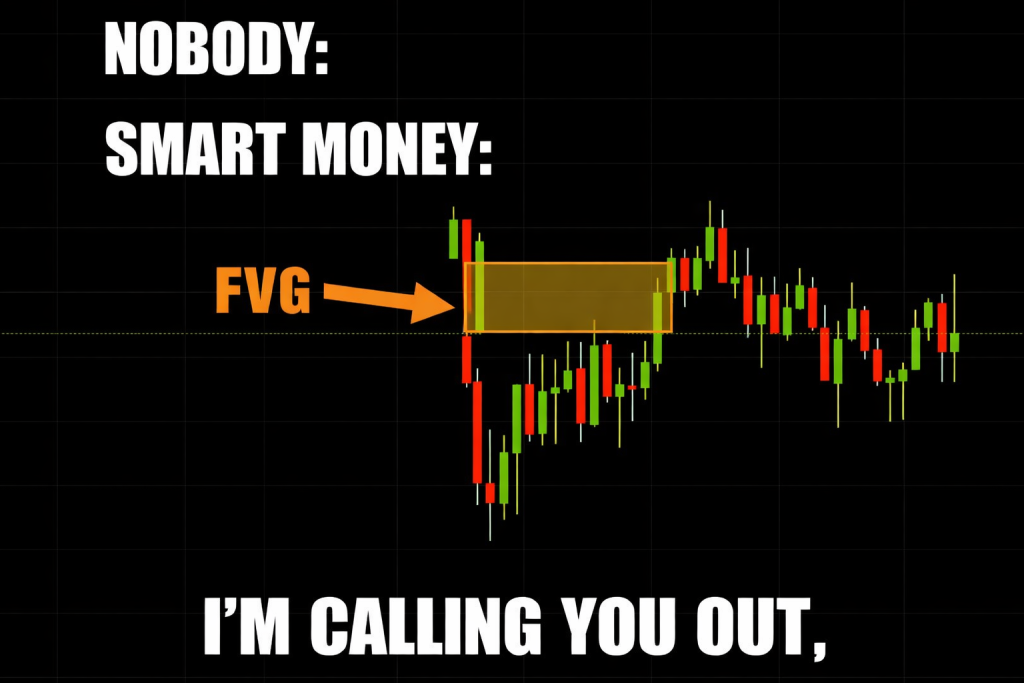
The QZ GAP indicator is essentially detecting Fair Value Gaps — a Smart Money term for the same phenomenon.
Classic FVG definition:
- Bullish FVG: Gap between Candle 1’s high and Candle 3’s low (Candle 2 created the imbalance)
- Bearish FVG: Gap between Candle 1’s low and Candle 3’s high
The “fair value” is the area price skipped — the market considers this zone undervalued/overvalued and wants to revisit it.
The 50% Rule: When a Gap Goes “Bad”
Not all gap tests are equal. How price enters the gap determines its quality.
Strong Gap (High Probability Bounce):
- Price taps the edge of the gap and rejects
- Price enters less than 50% into the gap and reverses
- Shows the imbalance is being respected
Weak Gap (Likely to Fail):
- Price penetrates more than 50% into the gap
- Price closes a candle body inside the gap
- Shows buyers/sellers are not defending the zone
- Sometimes Bullish or Bearish gaps are formed at LQ zones for liquidity sweeps. Be careful as these are fake candies.
The Rule: “If price goes more than 50% into a gap, expect full fill and continuation. If it respects the first 50%, expect a bounce.”
How to Use This With QZ GAP
- Identify active gaps
- Check for confluence — Is this gap at an order block? Previous structure? Key level?
- Watch the reaction — Does price reject at the edge, or slice through?
- Filled gaps change color (blue/yellow) — They’ve done their job, no longer active
Pro Tip: Stacking Confluences
The best setups combine multiple factors:
- Gap at an order block ✓
- Gap at a key Q level ✓
More confluence = higher probability = better risk/reward
Bottom line — 1 indicator is NOT a buy or sell. You need to read the structure.
At IKIGAI Trading Academy, we teach systematic trading — giving students the tools and structure so trading becomes their IKIGAI. Learn about the program https://www.coffeewithq.org/gp/
Bookmark & Read: How SPX 0DTE Really Works — By Qamar Zaman
⚠️ DISCLAIMER
This content is for educational purposes only and does not constitute financial advice. Trading options, futures, and equities involves substantial risk of loss and is not suitable for all investors. Past performance is not indicative of future results.
The QZ GAP indicator is a technical analysis tool designed to identify price imbalances. No indicator guarantees profitable trades. Always use proper risk management, never risk more than you can afford to lose, and consider consulting with a licensed financial professional before making trading decisions.
IKIGAI Trading Academy and its affiliates are not registered investment advisors. Trade at your own risk.