

Coffee with Q
Saw something this morning worth talking about.
I was on a sales webinar by a group that I know very well who claim them as big hedge funds and billion dollar traders. The pitch was simple. Look at the big exposure bar from early in the morning. If price has drifted away from the magnet, the market maker has exposure sitting there waiting. At three o’clock, take a directional trade or a spread betting price gets pulled back to the level.
On the surface, nothing wrong with the idea. The logic holds. Market makers do defend their exposure. MM Exposure levels do act as magnets. Premium at three o’clock is cheap because IV has been crushed all day. So yes, the window works.
Here is where the problem starts.
When you buy a course built around one variable, you walk away with one piece of a larger puzzle. You know the magnet. You know the time. You do not know the structure. You do not know the timeframe pressure. You do not know the trend. You do not know the river. You do not know whether today is a trend day or a chop day.
So what happens? You take the three o’clock trade every single session. You win some. You lose some. Over time your account bleeds out because the trades without structural support are killing you.
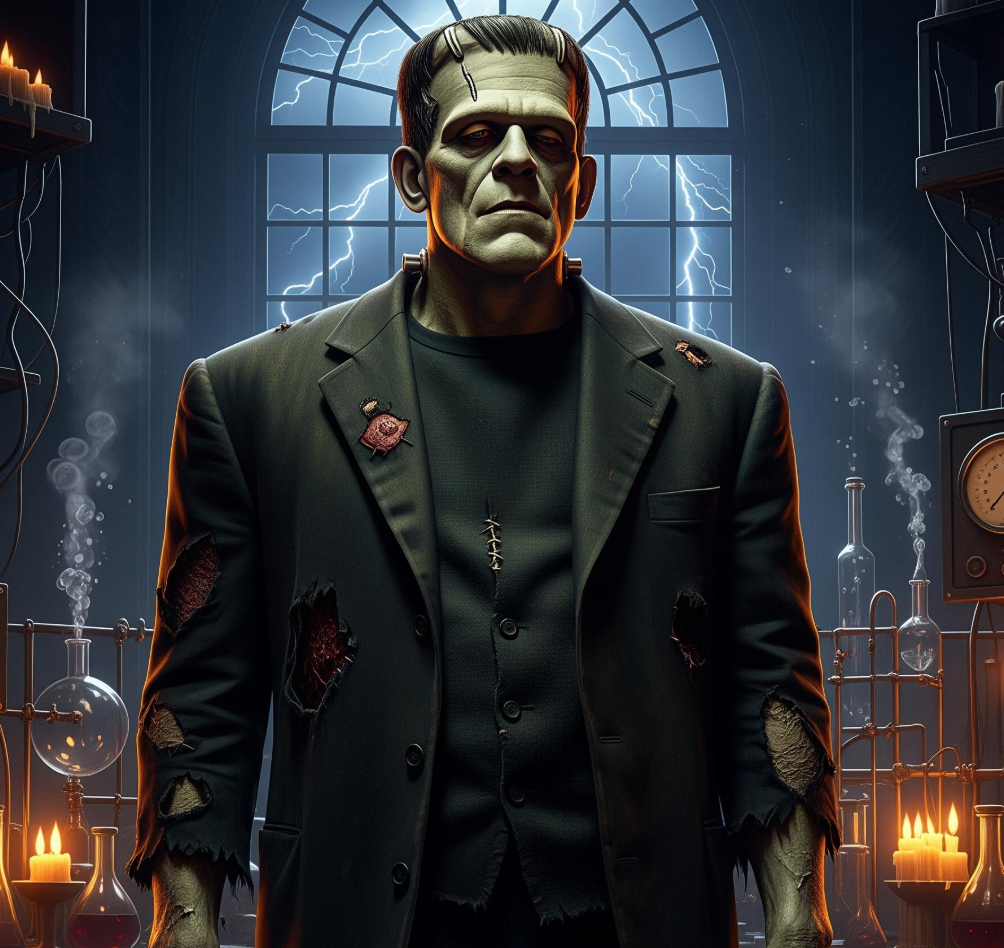
This is the Frankenstein problem.
You pick up a magnet idea from one vendor. You pick up a volume signal from another. You pick up a sentiment read from somewhere else. You stitch them together and call the mess a system. The parts do not talk to each other. The signals conflict. You freeze on entry because three indicators say go and two say stay. Or worse, you force the trade and wonder why your win rate falls apart.
The reason Q ALGO works is because every step in the checklist was built to work with the other steps. The levels feed the structure. The structure feeds the timeframe pressure. The timeframe pressure feeds the entry decision. Fifteen steps, plus QVDD, all pointing in the same direction before you pull the trigger. Not all boxes need to check. Build your own edge. The framework stays coherent.
Now here is the part worth hearing twice.
Three o’clock trading is not a bad idea. Three o’clock trading without structure is a bad idea. If you see a magnet sitting above or below spot at three o’clock, and the timeframe pressure lines up, and the river supports the move, and the trend has not flipped, take the trade. You already have everything you need. You built the edge already.
The question is whether you trust what you built, or keep shopping for the missing piece someone else is selling.
Run the checklist. Use the levels. Watch the structure. Let the three o’clock window be one more tool in the toolbox, not the whole toolbox.
This is how Pilots fly.
Q
If you need me to teach you how to do that, you have already the algo. I can teach this strategy.
Disclaimer
This is not investment advisory. I’m not calling trades. I’m teaching you to think. Trading futures and options involves substantial risk of loss and is not suitable for all investors. Past performance is not indicative of future results. The IKIGAI Algo and any associated indicators, tools, or educational materials are provided for informational and educational purposes only and do not constitute financial, investment, or trading advice. You should consult with a qualified financial advisor before making any trading decisions. Q Levels and affiliated parties are not registered investment advisors, broker-dealers, or financial planners. By participation, you acknowledge you are solely responsible for your own trading decisions and any resulting gains or losses. No guarantees of profit or specific results are made or implied. All sales are final. Please trade responsibly and only risk capital you can afford to lose.
Q Levels Trading | Coffee With Q