

Rene Perras | 00:00
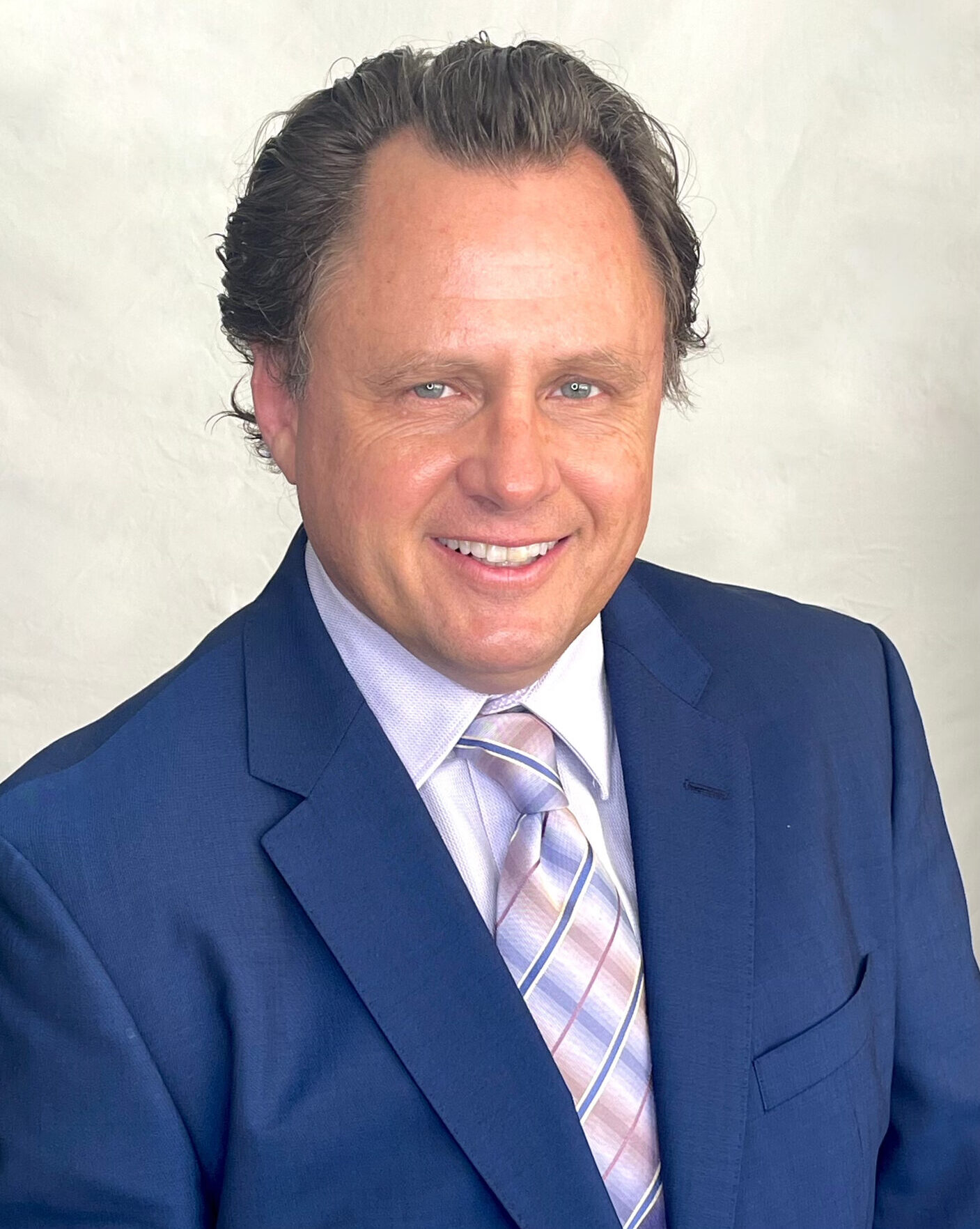
Hello, welcome to Palm Beach, Florida. Today we are hosting our subject-matter Masterclass show at the world-renowned Breakers Historic Resort Hotel. I’m Rene Perras, legal news reporter with Coffee with Q. I’m here with another edition of the Elite Legal Professional featuring Christopher Ligori, the newly sworn-in president of the Florida Justice Association (FJA). Chris is a Tampa Bay trial attorney who has spent nearly 30 years advocating for injured Floridians. Now leading the FJA in its 65th year, he continues its mission to protect individuals from negligence and uphold justice across the state of Florida. Welcome Christ, Chris, glad you were able to come and answer a few questions about yourself, your passion for justice, and the Florida Rule of Law.
Christopher Ligori | 00:52
Thank you, Rene. I appreciate it.
Rene Perras | 00:54
Chris, we’ve known each other for many years. You’ve always been involved in fighting to keep the civil justice courts open to Floridians. With FJA headquartered in Tallahassee and as the new president, FJA is essentially one of the largest plaintiff advocacy groups in the U.S. and the most important in Florida. Why the need to be involved personally?
Christopher Ligori | 01:16
I’m born and raised in Florida. I’m a fourth-generation resident, and I can help. I think I have been a big help in Florida because we’re under attack by the insurance industry. They’re not paying for homes to be fixed when you have a hurricane. They’re not paying claims when people are injured, and they’re always trying to put their thumb on the scale of justice, making sure people can’t get their injuries redressed when there’s an accident, or there’s a defective product, or there’s a, you know, pesticide that’s defective. They’re trying to get immunity from really any responsibility, which puts all of us in danger. I’m a fourth-generation Floridian, and I see the insurance companies becoming more and more powerful every day. And they’ve really put their thumb on the scales of justice, and they’ve really started to get even worse than they were before; they were pretty horrible in the past. We fight to make sure the little guy, the average person, can get a fair shake when they go to court, and it’s really only the Seventh Amendment to the United States Constitution which calls for redress of injuries by civil jury. We want to make sure people can get to the courthouse and get their full injuries redressed. When they go, they’re not limited in any way.
Rene Perras | 02:38
FJA has been fighting for people of Florida for nearly 70 years, for Citizens who have either been severely injured or died in a wrongful death event. Maybe you can explain the importance of the 7th Amendment and how it is critical in keeping the civil courts open and keeping everyone safe in Florida.
Christopher Ligori | 02:57
Well, the Seventh Amendment, as I said earlier, is the part of the United States Constitution that allows for a trial by jury for civil cases, and that was so important to our founding fathers. I mean, it’s like the Second Amendment. The First Amendment. There are no redheaded stepchildren in the amendments in the Constitution. All of them are incredibly important. So what we need to make sure that we do is keep the courthouse doors open to everyone and not allow the insurance companies or big businesses to continue to make sure that people can’t get access to the courthouse by getting immunity for hurting people with pesticides and the like. They want immunity with dangerous pesticides. For example, there are pesticides that are made in Russia and China that are not allowed to be used there, yet they ship them to the United States, and they don’t want to take responsibility for the harm it causes. They don’t want to be responsible for pain suffered in a hurricane claim. As an example, you get your roof ripped off or there’s roof damage; they don’t want to have to pay for that, so they want immunity, or they want to make it very difficult for someone to actually make a claim. There are a lot of people out here being wronged in the state, and we’re out there trying to defend them to prevent that from happening.
Rene Perras | 04:13
We would be in a bad state without the Seventh Amendment.
Christopher Ligori | 04:17
We’d be in a horrible state, and the times when they’ve made it difficult in filing a claim or nearly impossible to file a claim, you see the most abuse by insurance companies.
Rene Perras | 04:28
Yesterday you were sworn in as the new leader of the FJA. You’ve been part of the leadership team for at least five years, I think longer. What does it mean for you next year? Could you share a little bit about what is going to happen?
Christopher Ligori | 04:44
Well, yes, it’s actually 16 years. I’ve been one of the officers for the past four years; that’s how it works. So you’re right. It’s at least five years. It’s actually a little bit longer than that. You know what? What I see coming up in the next year kind of depends on what happens right now. The governor has a bill to expand sovereign immunity. What that means is the state is immune if any of their employees cause a crash. You’ve got a sheriff’s officer; I can think of one case right now where he actually was doing 90 miles an hour to actually get to a location where there were like two people fighting on a bus. I mean, no allegation of weapons or anything dangerous. Two people are fighting on a bus; the sheriff is travelling at 90 miles an hour, veers off the roadway into the median and T-bones somebody and kills him. They are limited in the state to paying $200,000.00. In other words, one person can get the max, which is $200,000 from the entity. On top of that, they have to go to the state of Florida legislature and get the claim bill passed. The legislature has to authorize payment for anything above the $200,000.00. So that’s a huge problem; people can’t get their injury redressed. In other words, they have to wait years and years for compensation to happen; if the state of Florida will even do it, they can decide not to pay anything. So that’s the big problem.
We had a bill passed that upped the limits to $350 thousand to $500 thousand, which is $350K for one person, $500K for the entire accident, and that makes it easier for people to get a lot more of their injuries covered when you get into an accident, say with a sheriff’s officer or you get somebody such as an employee, somebody who works for DCF or just any employee for the state. It could be a sheriff’s office, could be a local entity, could be a statewide entity; it doesn’t matter; they all have sovereign immunity. So by getting $350 thousand, you have a better chance of getting their injuries redressed right away, getting them paid. And then down the road, it lessens the effect of how much has actually gone for the claims bill.
Rene Perras | 07:01
Sovereign immunity means that no one is responsible. That’s what sovereign immunity is?
Christopher Ligori | 07:06
Yes. Sovereign immunity means they have immunity from being sued at all. Think of it as the law originated from old English law, right? That’s the history of the United States. They adopted a lot from English laws and concepts. It’s like you can’t sue the king. The king is the state of Florida. They’ve passed laws to allow that to happen, but it really handcuffs people and strings out the ability to actually get the wrongs righted. You know, some sort of harm, depending on what it is. It could be, like I said, an accident or something along those lines. Getting them paid. Because a lot of people need money to pay medical bills, they have old medical bills to be paid, future medical bills to be paid, and then they have the human damages to consider. You know, loss of enjoyment in life, pain and suffering, inconvenience, all of those things go into a judgment, and those things are limited because of the limits on sovereign immunity and then the hurdles they have to go through that end up taking years to be compensated.
Rene Perras | 08:12
So with sovereign immunity, there’s no possibility for redress, no ability to get proper compensation. For pain, suffering, loss of wages, things like that.
Christopher Ligori | 08:25
Yeah, they can be. That’s exactly what it does. Either limits it or makes it incredibly difficult and almost impossible. I mean, there have been people who waited 15, 20, 30, 40, 50 years. That’s the extreme, okay? But there were children from the Dozer school that had to wait, you know, decades and decades to get their injuries redressed by the state. Took place about three years ago. So you’re talking about the 30s and 40s and 50s all the way until today. Some take that long, and you can say about 10 to 15 years, and the whole time they’re suffering. They’re picking up more and more medical bills. They’re picking up, you know, and have more injuries than they should have to deal with; they have more medical care, and it’s really not fair to people who are harmed at no fault of their own. I’m sorry, you know, that’s just something that needs to be fixed.
Rene Perras | 09:18
FJA is widely recognized as the state’s largest civil trial bar, and it’s a political action group. FJA has always focused on the rights of consumers. How many members are you? What should people understand about FJA as a legal and a political action lobbying group?
Christopher Ligori | 09:38
Well, we have over 3,000 members all over the state. So everywhere you can go, from Pensacola to Key West, we have numbers. What our focus is to protect the rights of the people of the state of Florida, the average person, and wealthy people really can’t afford to pay someone hourly to get access to the courthouse. So one of the ways we work to protect is by maintaining access; so we help people by litigating with a contingency fee. In other words, we get paid based on the result. And that way, people don’t have to come out of pocket and pay somebody $300, $400, $500 an hour to work on a case, when we know the other side could pay those bills. So one of the things we want to do is make sure people have access to the courthouse. We want to make sure that we have the influence and pressure the legislature to kill bad bills. In other words, we need a political action committee. We have to fund campaigns and lobby people so they understand the ramifications of bills that are filed. And we are the only citizen-minded interest in the state of Florida that is a funded interest that actually stands up for regular people. No one else out there has the kind of financial resources to be funded like FJA. The groups that lack funding are at a severe disadvantage; they basically have to beg for help, and they are fighting massive business interests. The people we represent, and for whom we stand up, can’t organize and have political action committees. They can’t lobby in the state house. The members of the legislature don’t have some sort of war chest, or they don’t have lobbyists. They have nothing if we don’t step forward. We are the only group really standing up who can kill anti-consumer bills, and we do it all the time. We try to put forward proactive bills in order to make it better for Floridians. Cheaper too, cheaper for their insurance, but make sure that they can get the help they need when they need it.
Rene Perras | 11:41
It’s an incredible job that FJA does. The last time I spoke with someone at the FJA, I was told that there are approximately a thousand-plus special interest groups fighting for their own issues, and there’s possibly, what, three for Floridians? FJA being the most important one fighting for consumer rights.
Christopher Ligori | 12:04
Yeah, there are others, but they are not well funded. So in other words, they, as I said, have to go in and pretty much beg people to help them; it’s generally not very effective. When you’re talking about consumer advocacy, it depends on the organization, but generally it’s not very effective when it comes to getting people to go your way, fighting against these big business interests that have tens of thousands, hundreds of thousands of dollars, sometimes millions of dollars in a campaign. So the reality is that we are the last line of defense. I mean, let’s just put it this way. We are the only line of defense. To stop these bad bills and the insurance companies and big business that are pushing forward that will literally allow them to get away with murder, and that’s literally what the case is, getting away with murder.
Rene Perras | 12:49
And the bad bills are usually bills that deny regular folk, Florida citizens, residents, access to the civil justice system.
Christopher Ligori | 13:00
Right. It’s either they want bills that would give them immunity, or what they’re very good at is creating hurdles. So for example, sinkhole cases, right? And I’m doing this just because we help homeowners with hurricane claims and any kind of wind damage from storms, sinkholes, fires. We don’t have that many members who do this, but we stand up. That’s a big part of what we do because that’s what we believe in. They’re keeping the doors to the courthouse open. So what the insurance industry is very slick with sinkhole coverage is they went and made it very difficult, almost impossible, to actually file a claim, and what benefit is that to them? A, they don’t pay out anything, but yet they’re still billing you for coverage that they know it’s near impossible for you to trigger. All right. So that’s one of their biggest tricks. So, you know, you get nothing, complete immunity, or they make it so difficult, almost impossible, which acts like immunity for them. That’s why in Florida, you’ve seen denial rates with insurance companies skyrocket. In the last few years, because in 2023, they got a lot of what they wanted because of the governor, the former speaker, and the former Senate president. So it’s made it very difficult for people with, say, hurricane claims to get paid. And fully paid too. They’ll pay a little bit; they make it go away, but it won’t even come close to what it’s really worth.
Rene Perras | 14:32
On a personal level. I guess your personal journey. What drew you to specialize in the practice area of law for the injured?
Christopher Ligori | 14:42
It’s wanting to help people. You want to feel good when a job’s done. You want to feel like you actually helped somebody and you made their lives better, and that is a great feeling to have. And that’s what drew me to practicing personal injury law and working with the FJA.
Rene Perras | 14:59
Was there a pivotal case or moment that defined your path?
Christopher Ligori | 15:04
You know, there’s a couple of them. I can tell you right now, where my mother stepped up when I was young. I was diagnosed with dyslexia, and she would not take it. Back in the 70s, they didn’t know that much about it, and she actually got in there and just said, “No, we’re not going to accept what you’re saying that he can’t go to college or things of that nature. So she stepped up, and my parents, you know, sacrificed and put me through school, and that motivated me to always really make sure they were proud of me and that their belief and faith in me wasn’t misplaced.
Rene Perras | 15:39
She fought for you.
Christopher Ligori | 15:40
They fought for me
Rene Perras | 15:41
She fought for you.
Christopher Ligori | 15:43
They fought for me very hard.
Rene Perras | 15:45
They didn’t want to let you go to class, I guess, because of your issue.
Christopher Ligori | 15:56
Well, yeah, what happened was the teacher said that, look, he’s never going to college, out of the question. We’ll probably never graduate high school. We’ll probably just get a GED, and my parents said, absolutely not. My mom’s like, my son’s, he’s going to go to college if he wants to pick up a trade or whatever he wants to do. He’s going to do it with a college degree. You know, we come from a working-class background. So, I mean, that’s normal for my family to be in a trade, but she wanted me to at least have the degree so I would have the flexibility. So obviously I graduated high school, graduated college, went to law school, and have been practicing for over 30 years, and I’ve really wanted to make sure that my mother and my father knew that their faith in me was not misplaced, that they can be proud of me and say, hey, my son made us proud, and we did the right thing.
Rene Perras | 16:42
Well, I’m sure a lot of people, if they could see you now, would say they were definitely really wrong about what they were telling you.
Christopher Ligori | 16:50
Hopefully so. Hopefully so.
Rene Perras | 16:53
Thanks, Chris, for coming on the show today and sharing your time and insights. Into the complex world of legal and political advocacy, I’m Rene Perras, legal news reporter with Coffee with Q. Tune into our show next time with another legal professional who will discuss and educate us on a trending topic of the day. So good to have you on.
Christopher Ligori | 17:14
Thank you, Rene. I appreciate you
Rene Perras, CWQ Legal News Reporter