

Rene Perras | 00:05
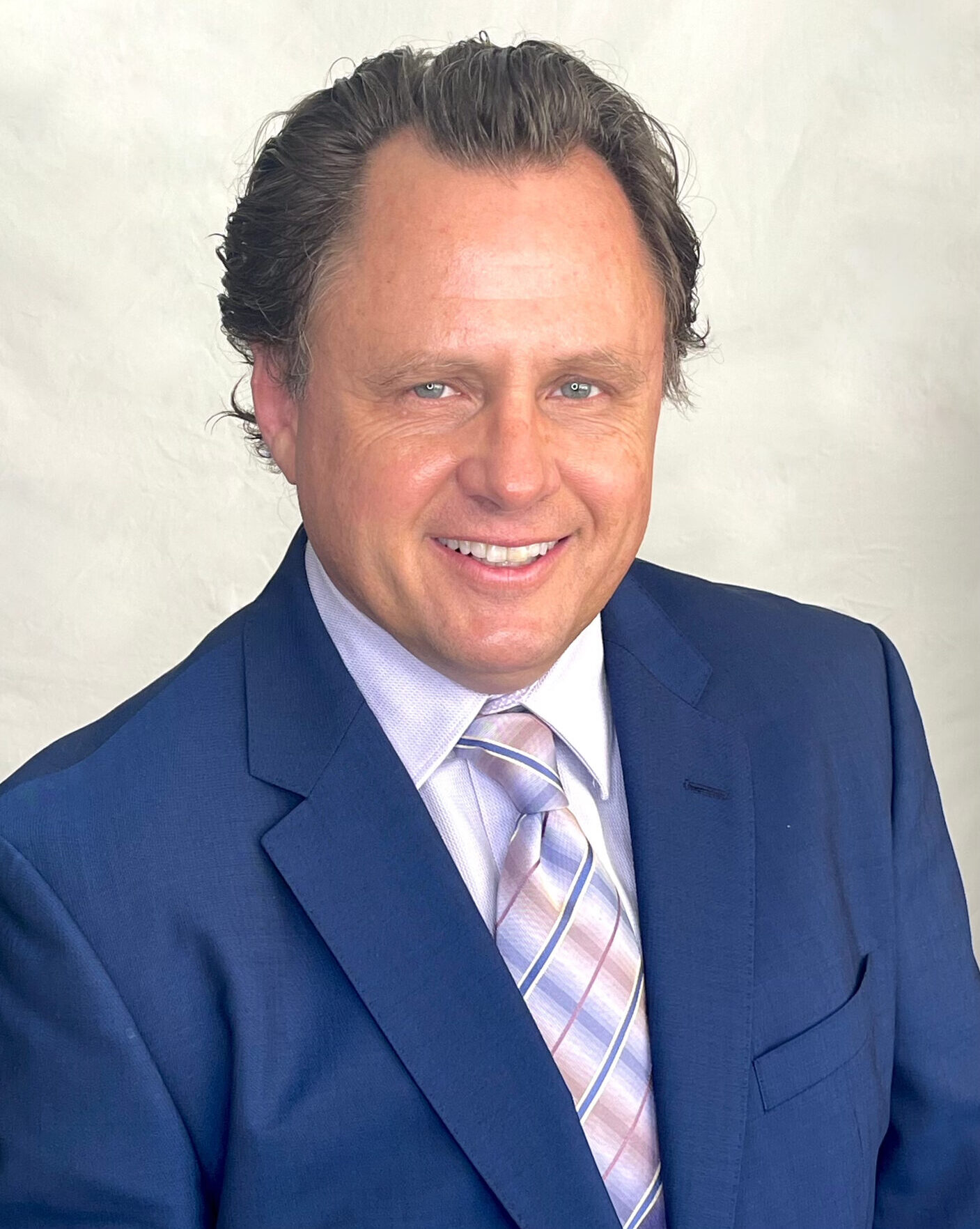
Hello, Welcome everyone to Southern California. Today, we are hosting our subject matter masterclass show from the world-renowned Del Coronado Hotel. I’m Rene Perras. Legal news reporter at Coffee with Q. I’m here with Nicholas Timko, a trial attorney from New York City at the American Association for Justice. Winter convention. Airing another edition of the elite legal professional. Welcome, Nicholas. Glad you could join us to answer a few questions about the rule of law, yourself, and your passion for justice, when it comes to premise liability injuries in New York City.
Nicholas Timko | 00:43
Good morning, Rene. Thank you for inviting me to Coffee with Q.
Rene Perras | 00:48
Glad you’re here. As a member of the AAJ Board of Governors representing New York and a former president of the New York State Trial Lawyers Association, what are your thoughts on the future of our legal system?
Nicholas Timko | 01:00
Frankly, Rene, I’m concerned. The Seventh Amendment of the Constitution guarantees everyone the right to a trial by jury in all civil matters. However, many others have been on a mission to take away your right to the courthouse. They’re trying to prevent you from obtaining legal representation because they’re looking to cap attorney’s fees only for the injured party who wants to sue them, not for their lawyers, because they know that if they make it economically unfeasible for someone to hire a lawyer, they won’t have representation, they won’t have claims, and they basically go get away with whatever they’re trying to get away with, which is needlessly injuring people and not having accountability.
Rene Perras | 01:52
So it’s an indirect way of potentially closing down the civil justice system. Why is it important to have lawyers who are well-trained in handling premise liability cases, or more commonly referred to as slip, trip, and fall injury law?
Nicholas Timko | 02:08
Well, premises cases are somewhat unique in the sense that they involve a lot of regulations, they involve building codes, and especially in a place like New York, there are building codes. When a building is built, that dictates what building code applies to it. So if you bring a case and you think, wow, the modern building code, a building should have certain types of functionality. However, if the building is very old and it was built a long time ago, it can be grandfathered in under a prior code. If attorneys don’t understand this, if they don’t look to establish when the building was built or what code is applicable or find exceptions that would bring an old building into a more updated building code, you can lose your case.
Rene Perras | 02:58
That makes sense. Was there a pivotal case or a moment that defined your path in helping the injured?
Nicholas Timko | 03:06
As a matter of fact, there was, as a young law student, actually, and I was starting to practice, and I had a deposition. My deposition was with two individuals who were actually survivors of a concentration camp in Germany. I saw the tattoos of their numbers on their wrist. And I spent hours after the deposition just talking with them and learning about things, understanding that people needed help. They needed someone to stand up and speak for them when they couldn’t speak for themselves, to fight for them when they couldn’t fight. For themselves, and it inspired me not just for those clients but for all the injured people in New York that I represent them. Fight like hell to make sure that they get the best legal representation and that they get the fair and just compensation that they’re entitled to.
Rene Perras | 03:59
You’re currently serving as a dean at the New York State Trial Lawyers Institute. Can you
describe your role?
Nicholas Timko | 04:06
So the New York State Trial Lawyers Institute is the educational arm of the New York State Trial Lawyers. The purpose of it is to educate trial lawyers who represent injured parties to make them better lawyers, to help them understand the changes in the law, and to be able to better represent their clients. As one of 12 deans, we set the agenda. We review potential differences. We have continuing legal education seminars, and what we want people to learn. Carry out those seminars, and we teach other lawyers. My particular area has been depositions and trying to educate lawyers, young lawyers, experienced lawyers, with the newest techniques, with the newest ideas for how to counter what the defense is doing to try to prevent us from getting the evidence that we’re entitled to and we need in order to prove our client’s case.
Rene Perras | 05:03
You’re not just a lawyer, you’re an educator, you’re a teacher.
Nicholas Timko | 05:07
Yes, and that part of it is actually quite rewarding to help other lawyers understand what’s happening and how to counter some of the things that happen, which is one of the reasons I’m here at AAJ because we have some of the best lawyers in the country here. Helping and educating each other, just sitting around and talking, or attending CLEs for new lawyers, for experienced lawyers who have faced the same problems that we face in New York, but have come up with different innovative ways to counter the tactics of the defense, and to make sure that their clients get their fair day in court.
Rene Perras | 05:46
The firm has an impressive record of helping families achieve fair and just compensation. This often means a substantial settlement or verdict for their injuries and losses. How do you want to be recognized beyond just your successful courtroom record?
Nicholas Timko | 06:03
Well, I think I’d like to be recognized as someone who cares about my clients and who always puts my clients first. We have many situations where I’ve seen many lawyers; there are lawyers out there who have many cases and are just turning over cases, settling, and we don’t do that. We look at the clients, we look at their situation, and we say, is this the right settlement? Is this a fair settlement? Do we have to go to trial? We prepare every case as if we’re going to go to trial and take a verdict. As a consequence, we tend to have better results than many other firms that rarely, if ever, try a case. And I’ve been asked many times by colleagues of mine to take their cases where there aren’t fair settlements, to take them to trial on their behalf. So that’s where I think we make a difference. I love being in court. I love trying cases. I love representing my clients, presenting evidence to juries to get fair verdicts, and we’re not afraid to do it.
Rene Perras | 07:08
In slip, trip, and fall cases, does the age of the buildings in New York City make it more dangerous than other cities?
Nicholas Timko | 07:15
Well, in fact, it can, and as I spoke a little bit earlier, many older buildings, there are buildings here built in the early 1900s. The building codes, primarily the building code of 1936 and 1968. Then, in the late 90s and 2000s, the cities adopted an international building code. But determining which building code applies, and we’ve had many cases where the defense would argue Well, this building was built in 1900. It doesn’t have to have all of these safety, the safety provisions that a modern building would have because it’s grandfathered in under the law, and it was built in 1900.
So we don’t have to have ramps, and we don’t have to have proper handrails, and we don’t have to have steps that have treads and risers that are appropriate for safe traversing up and down the stairs, and so this can be a real problem.
Rene Perras | 08:13
So do they have to make them? Do they have to adapt to some of the codes in certain circumstances?
Nicholas Timko | 08:18
They do, but you have to figure out whether those exceptions apply. If they make substantial renovations to a building, they may have to upgrade the entire building to meet code. But in many cases, landlords don’t do that, and so the buildings exist as they did in 1900 or 1905 when they were built, and they argue in court that the building code doesn’t apply. That makes it more difficult if we’re trying to establish a case of negligence. We don’t have a building code to rely on. They argue that since they complied with the building code, the building is by definition safe, and we have to argue with our experts and engineers that it doesn’t matter that you complied with the building code. Sometimes that’s not enough. You have to comply with what’s called good and accepted building management or maintenance, standards, practices, and procedures from various entities that provide those.
Rene Perras | 09:14
So it’s good to be aware of all those instances. What are the advantages of hiring a trial lawyer like you with real courtroom experience and victories in New York City?
Nicholas Timko | 09:24
Well, I think one of the main advantages is that having been in a courtroom and having stood before juries and having proven cases on behalf of clients, we understand what it takes to win a case, and we have new associates in our firm coming through at various times and we try to educate them and tell them, until you’ve stood in front of a jury, until you’ve had to present your case to a jury, you never really understand what it takes to win a premises liability case. That is important because when you start the case, you understand the kinds of evidence to look for, you understand the different issues that are going to face your client and their testimony, how to prepare your case, what to look for and discovery from the defendants so that you can actually be ready for trial and be able to first survive a summary judgment motion. So your case doesn’t get dismissed, which happens quite often, and then if you do survive that, being able to win at trial.
Rene Perras | 10:27
How about selecting the wrong argument? Do you see a lot of other lawyers potentially take a wrong argument into court and have their case dismissed?
Nicholas Timko | 10:37
Well, there’s an old saying that we learn in law school, bad lawyering makes bad laws and we frequently see that happen where lawyers are hyper-focused or they look at one argument and think this is the argument without doing a focus group, without consulting colleagues, without really understanding the broad scope of what this case is and then So, some re-judgment motions are made, bad court decisions come down, and they become sound bites to be used again and again by other defendants in other cases. We’re actually facing one of those right now in a case in New York involving a sidewalk injury. There is an administrative code that deals with sanitation rules and says that if you own a home or building, you have to shovel the snow within four hours of the end of a storm. It’s a sanitation code. Lawyers like me have tried for years to use it to impose liability for not shoveling on a building owner, but the courts have repeatedly said that it does not have anything to do with tort liability or negligence. What happens if you don’t shovel, you get a fine, $50, $100. Recent statute in the last five or 10 years of the administrative code section 7-210 has imposed Port liability for negligence, responsibility for sidewalk maintenance, including snow shoveling on commercial buildings, every one but one or two family owner-occupied homes. The defense has now tried to use the sanitation code to argue, and they’re doing it in a case we have right now, that four hour window to shovel or get a fine somehow grants them four hours of immunity that they can sit around and watch people fall and get injured and laugh because they have absolute immunity and no responsibility until the four-hour window closes.
Rene Perras | 12:34
That doesn’t make any sense.
Nicholas Timko | 12:34
It certainly doesn’t, but it’s been argued, and there are court opinions that seem to say that we are of the position that a recent court of appeals decision it came down in the last few years, overrules all those cases and those nonsensical results, but we’re still fighting the issue.
Rene Perras | 12:55
So truly understanding New York state law can make the difference in receiving fair compensation for your injuries or having your lawsuit thrown out. Can you give us another example and share your insight into the legal complexities that exist out there?
Nicholas Timko | 13:10
One particular case that comes to mind. There are instances where you’re involved in some activity on a premises and there’s a doctrine called assumption of risk, and we represented a young man who was in his high school baseball team. was injured during a complex practice drill, the first of the season, where he lost the eyesight in one eye because the coaches were hitting multiple balls to multiple players, throwing them different ways and had inadequate protection for the players. We brought the claim, and the defendants claimed that because he was playing baseball, he automatically assumed the risk. We lost at the trial level, although the judge did say that if it were his decision, he would have let the case go to the jury, but he felt compelled by appellate court decisions to dismiss it.
We went to the appellate division. We lost three to two, which allowed us to go to the highest court in New York, the Court of Appeals, and we got a reversal, and the court pulled back on the doctrine of assumption of risk and allowed us to go to trial, and present our arguments to a jury that in this particular circumstance, this wasn’t simply I was playing a game and I stumbled and I fell. This was something that was within the coach’s control, and they set this whole thing up, and the player who is a student, does what the coach says, had no control and did not assume the risk of this particular injury.
Rene Perras | 14:30
Sounds like a nice victory for all future cases that have similar facts.
Nicholas Timko | 14:35
It was a good victory, although there was a dissenting opinion by Judge Rivera that went much further than the majority, and it would be nice to have that as the majority opinion in the law in the state of New York, but we have to keep working on.
Rene Perras | 14:50
That. Well, thank you, Nick, for coming on the show today and sharing your time. An experience about the complex nature of New York City litigation.
Nicholas Timko | 15:00
Thank you, Rene.
Rene Perras | 15:02
I’m Rene Perras, legal news reporter at Coffee with Q. Tune into our show next time when another legal professional will discuss and educate us on a trending legal topic of the day.